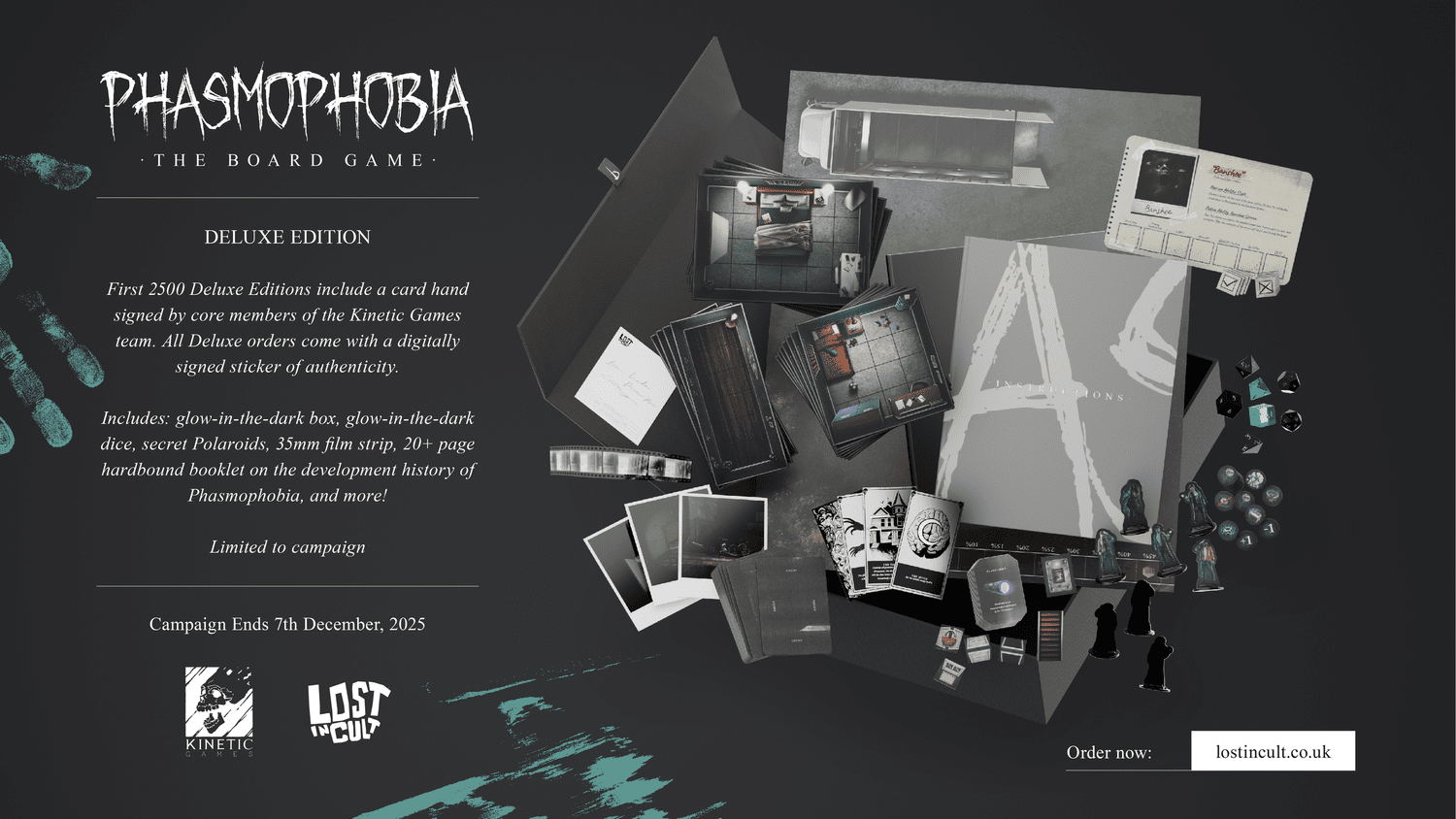
**Can Phasmophobia’s Ghost-Hunting Thrills Survive the Leap to a Board Game? Let’s Take a Closer Look**  **Can the ghostly sensation that is Phasmophobia truly manifest in cardboard and dice, or is something lost in translation?** That’s the burning question hovering over every coffee table as one of gaming’s most strikingly spooky phenomena shuffles its way out of the digital realm. Over the past few years, Phasmophobia captured hearts—and jump-started pulses—by blending collaborative gameplay with unnervingly dynamic scares, all tightly woven within a web of emergent teamwork. Now, with a new board game on the horizon, there’s palpable excitement—and natural skepticism—about whether the spirit of the original can persist without those pixelated apparitions whispering through your headphones. We’re on the brink of finding out. ## **Phasmophobia Board Game Announced: The Essentials** Recently, Kinetic Games and DreadXP, a UK-based board game publisher, revealed plans for a tabletop adaptation, aiming for a late 2024 release. Adapting a remarkably effective video game—where sudden noises and shifting shadows keep you teetering—into a physical format is no minor feat. After all, in the digital version, every creak, flicker, and chilling whisper is meticulously engineered to grip the player. Yet, by focusing on what made the beloved video game so magnetic—friendship forged under pressure, deduction under duress, and the oddly comforting chaos—a board game version promises a new experience. According to Eurogamer, prototype demos have already showcased systems for role differentiation, gear cards, a sanity meter, and even a time-pressured haunting mechanic. Here, tension often strikes with the innocent flip of a card or the slow encroachment of dread as you realize the spirit is—perhaps surprisingly—smarter than you’d like. ## **Why Cooperative Play Makes Tabletop Phasmophobia Exceptionally Promising** Underneath its spectral scares, Phasmophobia dazzles as a cooperative marvel. Assigning roles—from journal scribbler to EMF operator—mirrors the role-driven dynamics found in classics such as *Eldritch Horror* or *Betrayal at House on the Hill*. In the context of tabletop gaming, this approach feels particularly innovative, offering fresh possibilities for shared strategy and suspense. Gathering friends around a table—dice in hand, suspicion in the air—creates moments that feel notably improved over simple digital communication. There’s profound satisfaction in working together, nervously passing equipment tokens and mulling over every decision. For those seeking face-to-face thrills and collaborative problem-solving, Phasmophobia’s analog edition could be remarkably effective at sparking the same anxiety-fueled camaraderie as its online counterpart. ## **A Closer Look at the Mechanics: Crafting Tabletop Terror** Reports from early playtests suggest the board game leans into highly efficient randomization: modular maps, a wildly unpredictable ghost deck, and sanity tracking reminiscent of *Arkham Horror* all combine to keep each session feeling fresh. The game’s investigative layer—piecing together clues from temperature readings or shifting EMF patterns—demands real discussion, inviting players to draw conclusions before it’s too late. Unlike the video game, which relies heavily on engineered jump scares, the board game draws its tension from player imagination and the luck of the draw. Unexpected events can change the flow instantly—a misplayed token or an unlucky card can create genuine unease, especially when paired with suggested atmospheric cues. Through this surprisingly affordable approach, Phasmophobia’s spirit feels alive and well, even without the need for a screen or headset. ## **Translating Atmosphere: Overcoming the Ghostly Gap** Bringing such a uniquely digital experience into the tactile world—where tools don’t beep on command and voices don’t distort through VR—is undeniably challenging. In the game’s original setting, ghostly interactions hinge on real-time mechanics, from voice-reactive hauntings to lights that dance at the edge of your vision. Once you step away from the monitor, some of that meticulously orchestrated fear risks evaporating. However, the designers seem acutely aware of this hurdle. By building in scenario cards, rich descriptive text, and even optional soundscape suggestions, they’re hoping to evoke tension through social play and vivid imagination. Dim the lights, flicker a candle, and suddenly a simple living room becomes eerily reminiscent of Phasmophobia’s digital haunted houses. The communal act of storytelling—anchored in physical, shared space—might prove extremely reliable at reigniting those familiar chills. ## **Can Phasmophobia Board Game Recapture Its Digital Magic?** With hits like *Mansions of Madness* and *Dead of Winter* laying the groundwork, horror games have proven incredibly versatile on the tabletop. By shifting the focus towards deduction, teamwork, and shared storytelling, Phasmophobia’s adaptation could become a must-have for fans of spooky group adventures. Existing enthusiasts—those who reveled in live-streamed chaos and howled in group chat—may find the experience, while quieter, is now more tactile and engaging than ever. I still remember being hunched over a digital map, headset askew, my friends shrieking as a ghost appeared just out of sight. That raw, unfiltered tension? If the board game can rekindle even half of that energy—over candlelight and clattering dice—it’s poised to become a regular haunt for game nights everywhere. | Core Elements | Phasmophobia Video Game | Phasmophobia Board Game | |——————-|—————————–|—————————————-| | **Platform** | PC (VR optional) | Physical Board Game | | **Team Roles** | Digital, class-based | Card-driven, each with unique traits | | **Ghost Behavior**| AI swarm logic, dynamic | Randomized via cards, player actions | | **Atmosphere** | Audio/visual cues, proximity| Scenario cards, mood-setting tips | | **Replayability** | Exceptionally high—updates | Exceptionally high—modular scenarios | ## **Final Take: Does Phasmophobia’s Tabletop Edition Stand a Ghost of a Chance?** Looking ahead, there’s every reason to feel optimistic. Admittedly, the analog world can’t recreate every detail, but it does offer surprisingly effective ways to nurture that all-important sense of dread. Shared anticipation becomes more tangible, and every drawn card or rolled die can send shivers through the room. Phasmophobia’s leap from screen to table might not echo with the same digital shrieks, but it promises a new, perhaps deeper, collective unease—a fear built on imagination, strategy, and friendly faces turned ghostly pale. For those drawn to haunting tales and collaborative tension, this is more than just another novelty—it signals a notably improved, social way to get spooked together. Phasmophobia could well prove, as candlelight glows and shadows press in, that there’s nothing quite as chilling as being scared—hilariously, hungrily scared—with friends, right there at the table’s edge. *For a deeper dive into the Phasmophobia board game reveal, catch the full Eurogamer article [here](https://www.eurogamer.net/can-ghost-hunting-phenomenon-phasmophobia-work-as-a-board-game-were-about-to-find-out).*
Related posts: